
How to Buy Original Paintings Online Safely
Our Guide to Red Flags and Hidden Costs

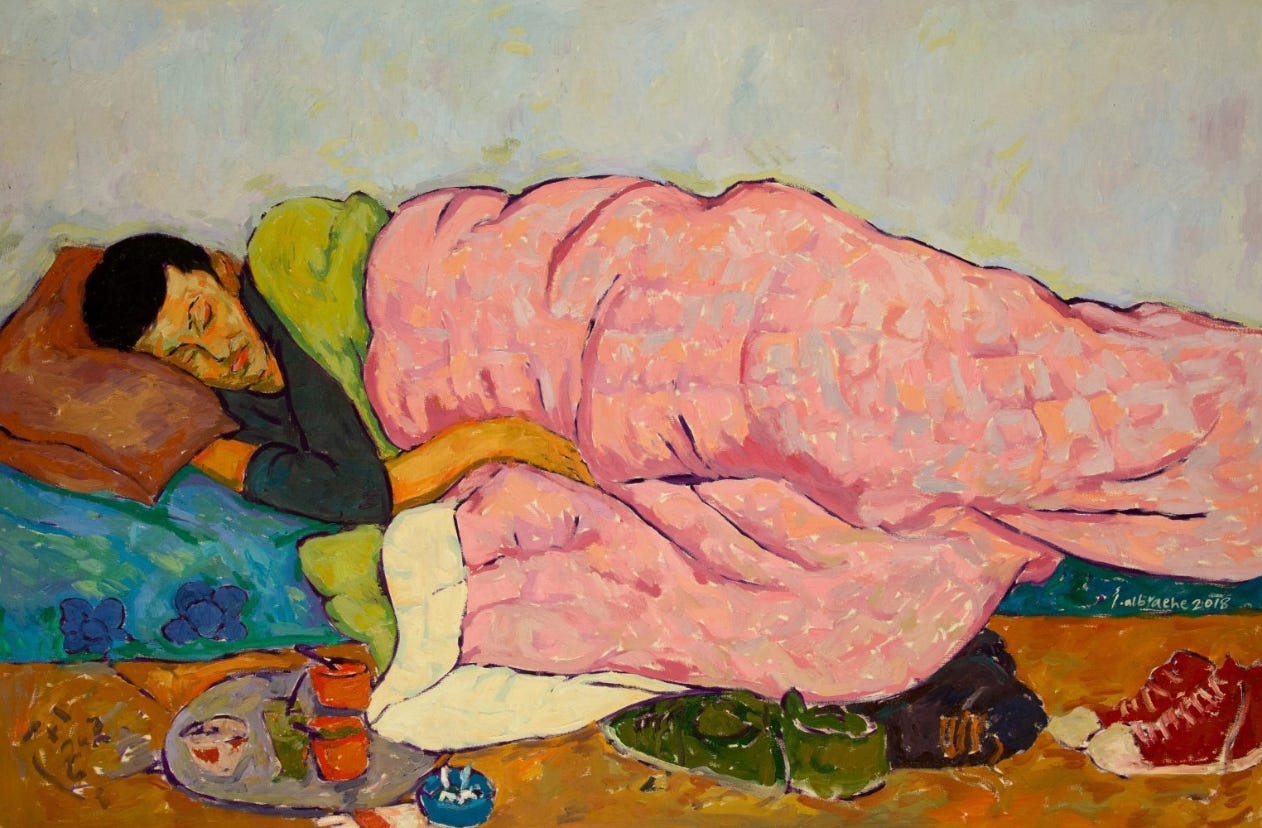
Anas Albraehe, The Dream Catcher, 2018
Buying original paintings online has become a normal part of collecting. While the post-pandemic surge in digital sales has moderated, online transactions still account for a significant share of the global art market. According to the Art Basel & UBS Global Art Market Report, online art sales reached $9.2 billion in 2025, representing around 15% of the market and remaining well above pre-pandemic levels.
However, this growth brings challenges in online purchasing. Artsy’s Art Market Trends 2025 report shows that 69% of collectors have hesitated to purchase art due to a lack of transparency, authenticity, and condition verification, as well as hidden costs.
Drawing on our experience as collectors and our knowledge of common pitfalls, we want to help art buyers navigate key moments when buying original paintings online safely.
How to Tell if an Online Painting Is Original
The Giclée Trap (How to Spot a Fake Original Painting)
With the rise of high-end digital printing, a shady practice has appeared: selling “original mixed media paintings” that are often just high-quality digital prints (Giclée) on canvas with a few real brushstrokes of oil or acrylic paint added to fake handwork. You think you are buying an original, but are actually buying a poster with a small touch-up.
We would recommend always requesting close-up, macro photos, or video clips of the artwork shot from a 45-degree angle. A genuine original painting has an uneven, organic, and beautifully chaotic surface. If the painting appears perfectly flat except for two or three suspiciously thick strokes, you may be looking at an enhanced print.
The Daylight Test (How to Verify Artwork Colors)
When photos of paintings are posted online, they are processed to look as attractive as possible. In addition, mobile phone and computer screens distort true colors and tones.
Before buying, ask the seller to send an unedited smartphone video of the artwork, shot in indirect natural daylight, such as on an overcast day or next to a window without direct sun. A moving video shot under flat, honest light will show how the colors behave in a real space and how light plays on the brushstroke texture.
Fortunately, most artworks seem better in person because no photo or video can capture the energy and feelings the artist put into it. But there are exceptions.
Should You Buy Framed or Unframed Art Online?
When buying art online, you often face a choice: purchase the artwork raw or pay extra for the artist or gallery to frame it. While receiving a ready-to-hang piece seems convenient, it is often a logistical and financial challenge for the buyer and a mental nightmare for the artist.
The Hidden Costs of Shipping Framed Art
Framing adds weight and volume to the package. A heavy wooden frame with glass requires a specialized heavy-duty crate. This means you will pay double or triple for shipping across borders. Shipping framed art also carries a high risk of glass breaking in transit, which can permanently scratch and ruin the painting underneath.
Our sincere advice: buy the artwork unframed — stretched canvas, canvas boards, or paper works shipped safely in a heavy-duty tube. It is significantly cheaper, far lower risk, and much less hassle.
Personal Style vs. Ready Frames
Art framing is deeply personal. A frame that looks good in an artist’s studio or in a gallery might completely clash with your home interior.
Buy the clean artwork and take it to your local framing shop. Choosing the passepartout, glass, and frame yourself is a classic collecting ritual and ensures the piece fits your space perfectly.
Very often, according to artists, coordinating framing with a buyer turns into a nightmare. The artist spends a great deal of unpaid time selecting options that the collector rarely approves on the first attempt.
Is 100% Prepayment Safe When Buying Art Online?
When buying art, payment terms always arise. For a first-time collector, being asked to transfer money up front can feel uncomfortable. We understand that. But established market norms remain unchanged.
Ready-to-Ship Art vs. Commissioned Art Pricing
If the artwork is finished and sitting in the artist’s studio or gallery, 100% prepayment is often the standard rule. Art sellers, like independent creators, may not be able to ship valuable, fragile goods worldwide without being paid first.
The Exception (Commissions): The rule changes if you order a custom piece. Never pay 100% upfront. The standard practice is a 50% deposit before the artist begins work, with the remaining 50% due after you approve the final result via video.
Essential Art Paperwork: Certificates, Invoices, and Contracts
When purchasing original art online, documentation is often your primary financial and legal shield. Many novice buyers ignore this, assuming paperwork is only for multi-million dollar museum pieces. In reality, proper documentation can define your piece’s secondary market value.
The Certificate of Authenticity (COA)
Without a Certificate of Authenticity, your painting may be treated as a colored canvas. A COA is important for resale, insurance claims, or estate valuation. However, a generic paper printed at home holds no weight.
A valid COA should be issued and signed by the artist, their authorized representative, or the gallery. It should include the artist’s name, exact title, year of creation, exact dimensions, and specific medium and materials. For digital security, modern artists often add a unique inventory number or tamper-proof hologram. Always verify that a physical COA is included in the shipping box.
Do You Need a Formal Sales Contract?
The necessity of a formal bill of sale depends heavily on the price of the piece.
If you buy artwork over €2,000, a formal purchase agreement outlining copyright retention, resale rights, and condition reports is standard. For pieces under €1,000, formal contracts are rarely used. The modern online art market at this level runs on mutual trust, public reputation, and clear, direct messages — an “Gentleman’s Agreement”.
Creating a Secure Payment Trail
You do not need a 20-page contract for a €500 painting, but you should establish a strong digital record of the transaction.
The Card-to-Card Issue: Many independent artists prefer direct card-to-card transfers or peer-to-peer services like Zelle, Venmo, or SEPA wire transfers. For a buyer, this can be a financial trap. Banks often treat these transactions as personal gifts. If the seller disappears or the artwork arrives damaged, you may have limited buyer protection and may not be able to dispute the charge. Furthermore, a personal transfer gives you no official receipt to show customs.
To protect yourself, always insist on a formal commercial invoice issued through trusted gateways like Stripe, PayPal Business, or Shopify. The seller might pay a small processing fee, but this invoice lists the artwork title and the agreed-upon shipping terms. It serves as your official receipt for customs and provides buyer protection if the package is lost.
Hidden Costs of Buying Art Online: Shipping, Insurance, and Taxes
The price you see on screen is rarely the price you actually pay. To avoid unpleasant surprises, calculate the total cost of ownership before entering your credit card details.
Art Logistics: Crating Fees and Fine Art Insurance
An original painting cannot simply be shipped in a standard cardboard box with bubble wrap. Large artworks usually require specialized wooden crates built by hand.
The possible trap here is that some sellers list a painting for $1,500 but later charge a separate $400 invoice for crating and handling. Always ask the seller for a fixed shipping and crating quote before paying for the artwork.
The Insurance Rule: Standard carrier insurance often caps luxury items and may not cover fine art. Always ask the seller: “Is this shipment fully covered under a dedicated fine art insurance policy for the full purchase value?” If not, expect to pay an extra 1–2% of the artwork’s value for proper coverage.
Cross-Border Return Policies and Customs Duties
If you are an American collector buying a painting from an artist based in Berlin or London, you are entering international customs territory.
Customs Duties: In the US, original art generally falls under Chapter 97 of the Harmonized Tariff Schedule, which means it is often duty-free. However, customs processing fees and brokerage charges still apply. The golden rule: the buyer is usually legally responsible for import taxes, not the artist.
The Return Challenge: Under EU law, online buyers have a strict 14-day window to return goods for any reason. Independent US artists often apply a “final sale” policy. But here is the catch: even if a return is allowed, the buyer must cover the return shipping and crating costs. If you return a $2,000 painting, you might easily lose $500 just on the logistics of sending it back.
Buying original paintings online is a rewarding way to build a personal space that feels alive. It is an investment in your mental comfort and direct support for living creators. But true enjoyment of the purchase often starts right with the buying process itself. Follow our recommendations above, and your entry into the world of art will become a sophisticated ritual, rather than a risky gamble.
Happy collecting!
Yours,
The Paragone