
What Kind of Art Collector Are You?

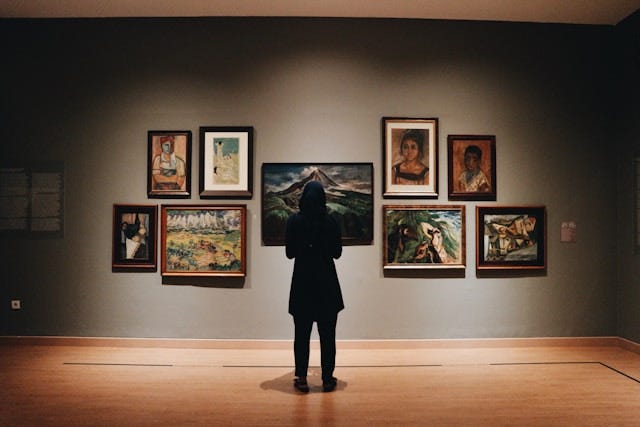
Zalfa Imani, Unsplash, 2025.
People often say they buy art because they “love art.” But love, it turns out, takes very different forms.
Some buy art the same way others buy stocks: studying market dynamics, investment potential, institutional support, and long-term liquidity. Others fill their apartments with blurred figurative paintings that perfectly match their designer lamps. Some collect art because it symbolises belonging to the seductive and mysterious art world.
The problem is that many people begin buying art before understanding what role they actually want art to play in their lives.
As a result, they often end up collecting someone else’s advice and desires: market trends instead of emotional resonance, status instead of meaning, expensive decoration instead of financial assets.
Understanding your motivation can fundamentally change your entire approach to buying art. It helps navigate the art market more intelligently, build a collecting strategy effectively, and avoid wasting time and money on overhyped nonsense.
And despite how mysterious the art world likes to appear, most collectors are usually driven by a small number of emotional, financial, and psychological motivations.
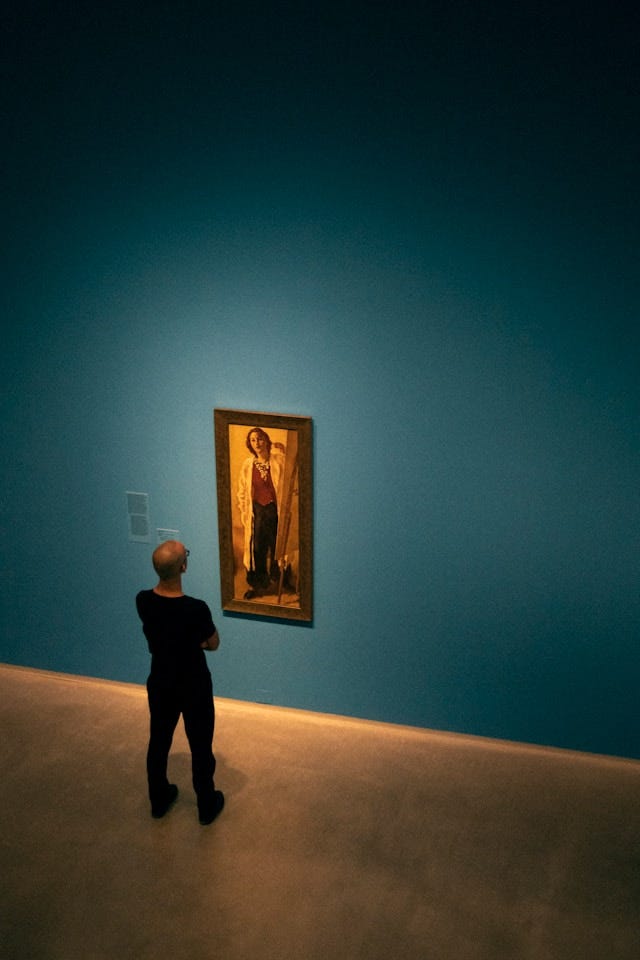
Jacob Hoferlin, Unsplash, 2025.
The Investor
For this type of collector, art is primarily an asset.
The emotional relationship with the work is secondary to questions of long-term value, market positioning, scarcity, and institutional support. These collectors pay close attention to auction history, museum recognition, blue-chip artists, and major galleries representing them.
There is often something surprisingly rational about this approach. While the art world romanticises collecting as something purely emotional, the reality is that art has long functioned as a financial ecosystem connected to wealth preservation, status, and speculation.
And in many ways, investors understand the mechanics of the market better than anyone else.
The Decorator
Some people buy art not because they want to “collect,” but because they want to live differently.
For them, art shapes atmosphere. It changes the emotional architecture of a home. A painting can soften a space, create tension, calm the mind, or completely alter how a room feels psychologically.
These collectors are often drawn toward colour, composition, texture, harmony, and scale. They care less about institutional prestige and more about how the work lives beside them every day.
This relationship with art is far more serious than the art world sometimes admits, because the spaces we inhabit inevitably shape our inner life.
The Status Collector
Art has always functioned as social language.
Long before Instagram, collectors used paintings, objects, and collections to communicate education, power, refinement, cultural access, and belonging. Contemporary art still performs this role extremely well.
These collectors are usually drawn toward recognisable names, fashionable galleries, highly visible artists, and works that already carry social validation. In many elite circles today, owning the “right” artist functions almost like wearing the right watch or entering the right private club.
The interesting thing is that this motivation is often hidden beneath the language of “taste.”
The Emotional Collector
This is perhaps the most instinctive type of collector.
These people buy art because something inside them reacts before logic has time to intervene.
They return to the same work multiple times. They think about paintings long after leaving the gallery. Certain artworks begin following them psychologically. Sometimes they buy pieces that make absolutely no financial sense — but they simply cannot imagine letting them go.
For emotional collectors, art is deeply personal, and this approach is becoming more relevant than ever. People are no longer searching just for beautiful objects—they are searching for meaning
The Legacy Builder
The rarest collectors are usually thinking beyond themselves entirely.
For them, collecting is not simply acquisition. It becomes legacy.
These collectors often support emerging artists (artists in the earlier stages of their careers), build long-term relationships with galleries and studios, and think carefully about coherence across decades rather than individual purchases.
They are not simply buying works they personally enjoy. They are building a memory of who they were. Often, every work inside such a collection reflects something about the collector’s own journey, character, obsessions, and values. The collection slowly becomes a psychological portrait of its owner — art as a reflection of identity.
Many of the world’s most important collections were built exactly like this.
Most people are never just one type of collector.
An investor can unexpectedly fall in love with a painting. A decorator can slowly become emotionally attached to certain artists. A status collector may eventually begin searching for something more personal and meaningful.
People also move between motivations throughout their lives.
Understanding your dominant motivation can change your entire approach to collecting. Different types of collectors require different strategies, different sources, and often completely different relationships with the market itself.
The more expensive the artwork, the more pragmatic the motivation behind the purchase — and the more intermediaries enter the process: advisors, galleries, consultants, auction specialists, private dealers. Not simply as sellers, but as mechanisms of validation, risk reduction, and investment credibility.
So, reflect on your relationship with art, because the real difference between good collectors and bad ones is not knowledge, money, or access — but self-awareness.
I started as an investor, but now I’m 100% an emotional collector. Much to my art dealer’s disappointment, my receipts have dropped big time because of it! 😂
I am still a wanna be collector((