
How to negotiate a price when buying art?
When the price is never a destination.

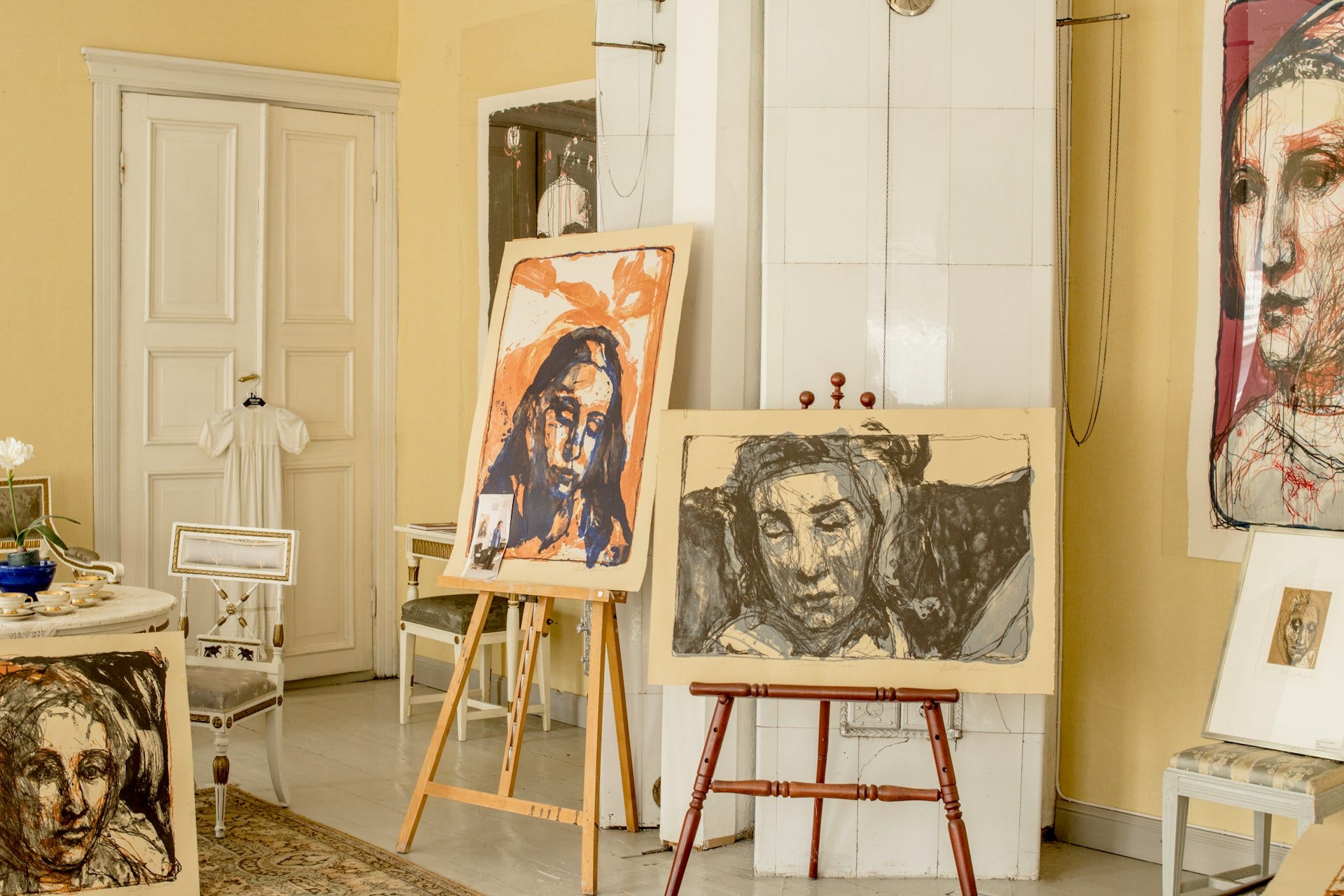
Hayffiield l, Exposición de cuadros en Rauma, Finlandia, Unsplash
Art is full of rituals. It wraps itself in mystique, guards its pricing, and acts as though beauty cannot be determined by something as vulgar as money. This leaves many new collectors wondering: is it acceptable to ask for a discount on something “priceless”? And if so, how?
The answer is yes, but there are nuances you should know before you ask.
Before we get into specifics, it helps to understand one fundamental difference between art and almost everything else you buy. There is no price list. No catalogue. No way to open another tab and find the same painting cheaper somewhere else — we are talking about original works. The price of a piece of art is always the result of multiple subjective factors: the artist’s reputation, the gallery’s standing, the timing, the provenance, and, ultimately, what a particular person is willing to pay for something that resists measurement. This makes the conversation about price both more complicated and more human than in almost any other industry.
So, let’s get straight to the point.
Discounts depend on where and how you are buying.
Buying directly from an artist
The most flexible option — whether you are buying through their website, Instagram, Saatchi Art as an individual seller, or at a personal exhibition. A 10–20% discount is realistic, especially if you are buying more than one work or paying in full upfront.
Interestingly, accomplished artists (not the same as popular ones) tend to price conservatively, leaving little room to negotiate. The better the artist, the less flexibility there usually is. They know the value of their work, and frankly — most artists dislike negotiating. Keep it brief, keep it respectful, and do not push.
Buying through online platforms (Artsy, Saatchi Art, etc.)
A quick distinction worth knowing: on Saatchi Art, artists usually sell directly. On Artsy, you are typically dealing with galleries, so the negotiation dynamics differ accordingly. With artists, see the section above; with galleries, see the section below. According to Artsy’s own data, around 74% of buyers who ask for a discount on their platform receive one, with an average of around 15% and discounts occasionally reaching 30%. Whether the work is listed at a fixed price or on request, it is always worth asking.
Buying directly through galleries or at art fairs
Art fairs are essentially galleries on the road — most booths are run by galleries, so the same rules apply in both contexts. At Art Basel 2025, galleries were offering reductions of 20–30% below asking price for works under $1 million. For smaller galleries and more affordable artworks, 10–15% is a standard and reasonable ask. One practical note: discounts during fairs tend to be lower, as galleries have invested significantly in their booth and arrive with higher expectations for demand. The best time to negotiate is between shows, when there is no urgency on either side. And avoid discussing discounts in front of the artist — it is awkward for everyone.
Buying through an art dealer or art advisor.
These two roles are often confused but work quite differently. An art dealer typically builds their margin into the asking price, so any discount usually comes out of their pocket — less room to move. An art advisor, on the other hand, works on your behalf, negotiating with galleries and dealers using relationships that a new collector simply does not have yet. Their fee — typically 10–15% — is paid by you on top of the sale price, but a good advisor can often more than offset this through better access and pricing. One important piece of advice: always ask your advisor directly how they are compensated. Some have undisclosed arrangements with galleries that can work against your interests. A trustworthy one will answer without hesitation.
If you are negotiating a discount with a middleman — whether it’s a gallery, an art dealer or an art advisor — keep in mind that the price cut is sometimes split with the artist, while other times it is absorbed entirely by the intermediary.
Buying at auction.
You do not negotiate at auction. But remember: the hammer price is not what you pay. Buyer’s premium — typically 25–28% — is added on top. Factor that in before you raise your hand.
Geography matters as well.
In the United States, asking for a 20% discount is completely normal — part of how business is done. In Europe, the standard is closer to 10–15%, and tone matters more than the number. What reads as confident in New York can come across as aggressive in Paris or London. Read the room.
How You Ask Matters More Than What You Ask
This is the part nobody writes about.
Artists often find discount requests genuinely painful — not out of greed, but because every work represents months of labour, doubt, and something deeply personal. A request to lower the price can feel like a devaluation of all of that. From the collector’s perspective, it is simply a search for a comfortable number. But the artist does not know that unless you tell them.
Which is why we would encourage you to ask yourself before you negotiate: why do I actually want a discount? Is it habit — the instinct to win a deal? Or is it a genuine question of finding a price that feels right? Because you are not buying a commodity. You are acquiring something with real psychological, emotional, and aesthetic weight — something you will live with every day. How you enter that process matters as much as the fact of owning the work.
Many artists care deeply not just about selling, but about who the work goes to, why the person wants it, and where it will live. When you explain why this particular piece matters to you, that is not a weak negotiating position. It is a form of respect for the artist’s work. And it is often precisely what opens up flexibility that a cold request for a discount never would.
This is where a price negotiation in art can become something more: the start of a relationship, and often the real beginning of collecting well.
Happy collecting.
Yours,
The Paragone
Great tips. thanks