
The Alchemy of Pain: Why Do We Worship Suffering Artists?
And what we can learn from them.

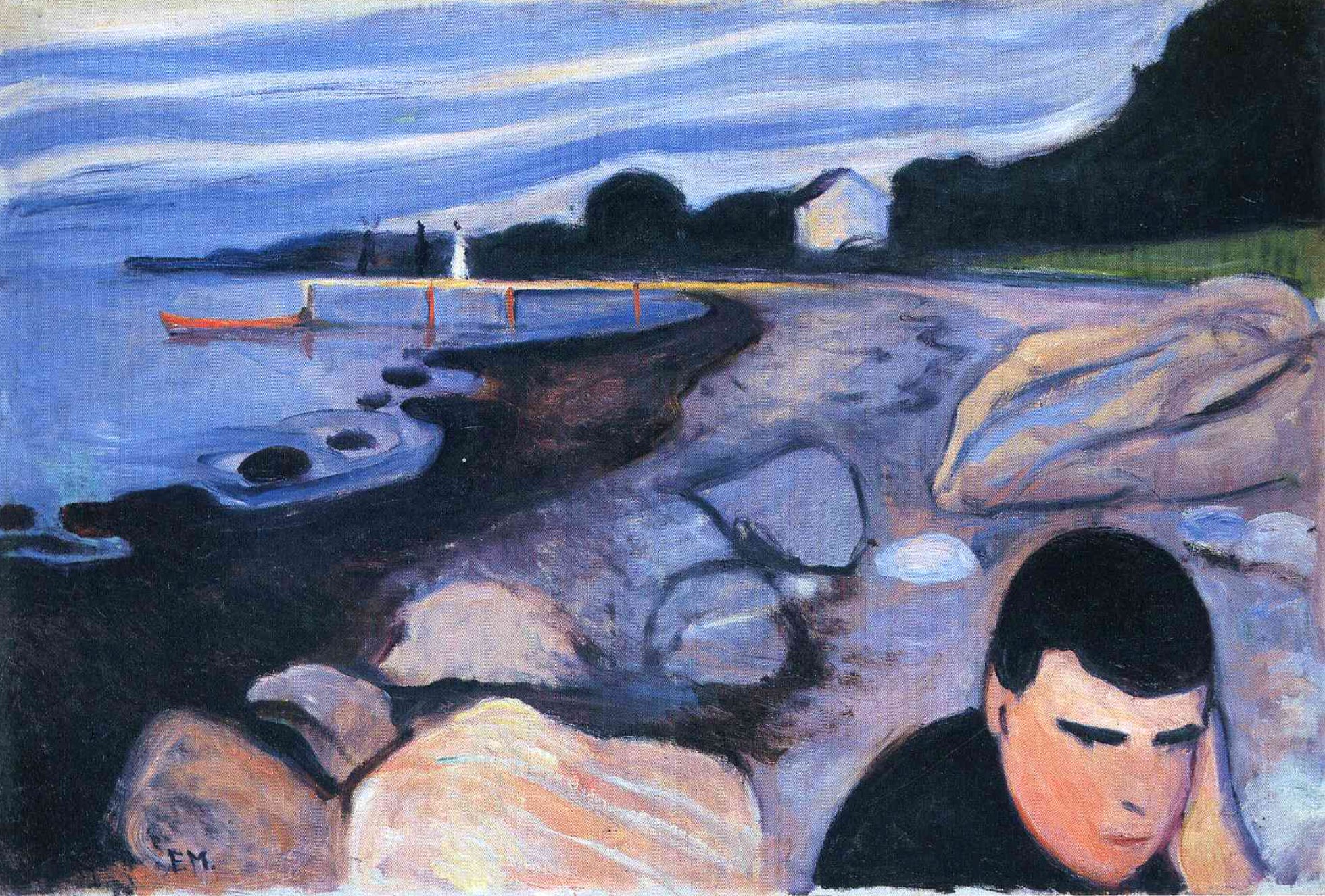
Edvard Munch, Melancholy (c. 1892)
There is an interesting paradox in our enchantment with art - we admire beauty, but we are often enchanted by pain.
A technically flawless landscape may impress us. A perfectly balanced still life painting may calm us. And a pair of lovers, captured in romantic languor, may inspire us. But if paintings are filled with pain, loneliness, grief, despair or adversity — they may get stuck in our thoughts, and we return to them again and again. We are convinced that they possess something “deeper”.
But what exactly is that “deeper”? Is depicted pain itself compelling? Or do we just believe that great art must be born from great suffering?
For centuries, our culture has celebrated the figure of a tortured genius. We are told the stories of Vincent van Gogh cutting off his ear, Edvard Munch haunted by illness and death, Egon Schiele confronting anxiety and mortality, Frida Kahlo transforming physical agony into visual language. Their biographies have become almost inseparable from their paintings.
Sometimes it is difficult to know whether we are fascinated by the work or the myth surrounding it.
Psychology suggests that our fascination with artists’ suffering may run much deeper than cultural storytelling.
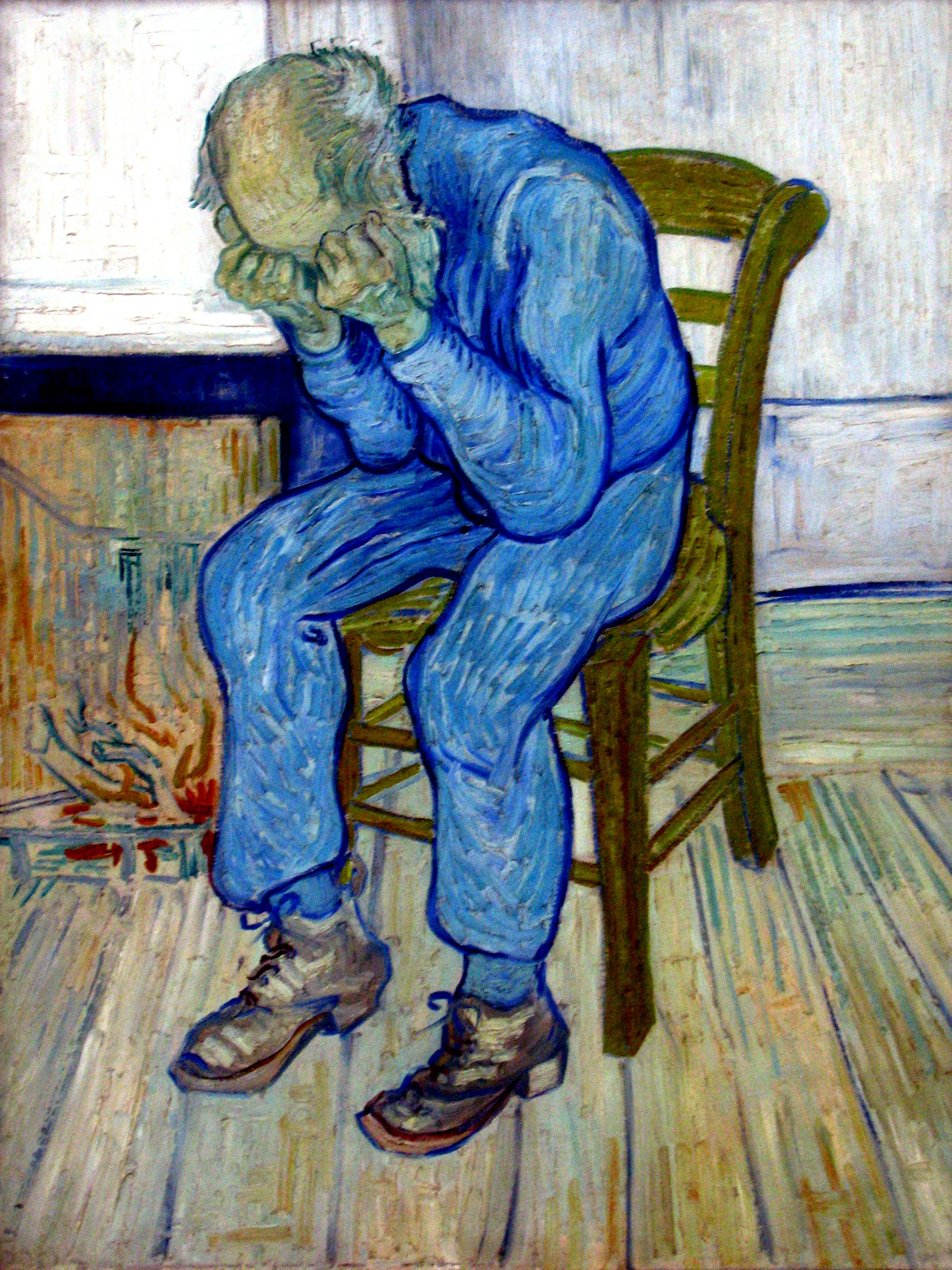
Vincent van Gogh, At Eternity's Gate (1890)
Why Does Pain Become a Proof of Authenticity in Art?
In an age saturated with perfectly constructed online identities, authenticity has become one of the rarest emotional currencies.
We know that social media is filtered. Social beliefs are curated. Even vulnerability is often strategically performed, becoming a next-level marketing stunt. We instinctively feel and distrust it. It seems so artificial, and we do not believe it because we do not recognize ourselves — daily life human beings.
And against all of this extraversive performance, suffering appears almost impossible to fake.
Psychologists have observed that people associate emotional pain with authenticity and sincerity. Someone who openly exposes grief, anxiety, or despair seems to have no reason to deceive us. Whether this assumption is objectively true or not, it shapes how we perceive artists. When we discover that a painting emerged from genuine life struggles, we often begin to see the work differently. The colors, composition, and brushstrokes no longer feel merely expressive; they become evidence of the artist’s pain.
This phenomenon is related to what psychologists call perceived authenticity — our tendency to value works that appear to reveal an artist’s life. And in art, through the pain, we are often searching not for perfection, but for proof that another human being has truly lived.
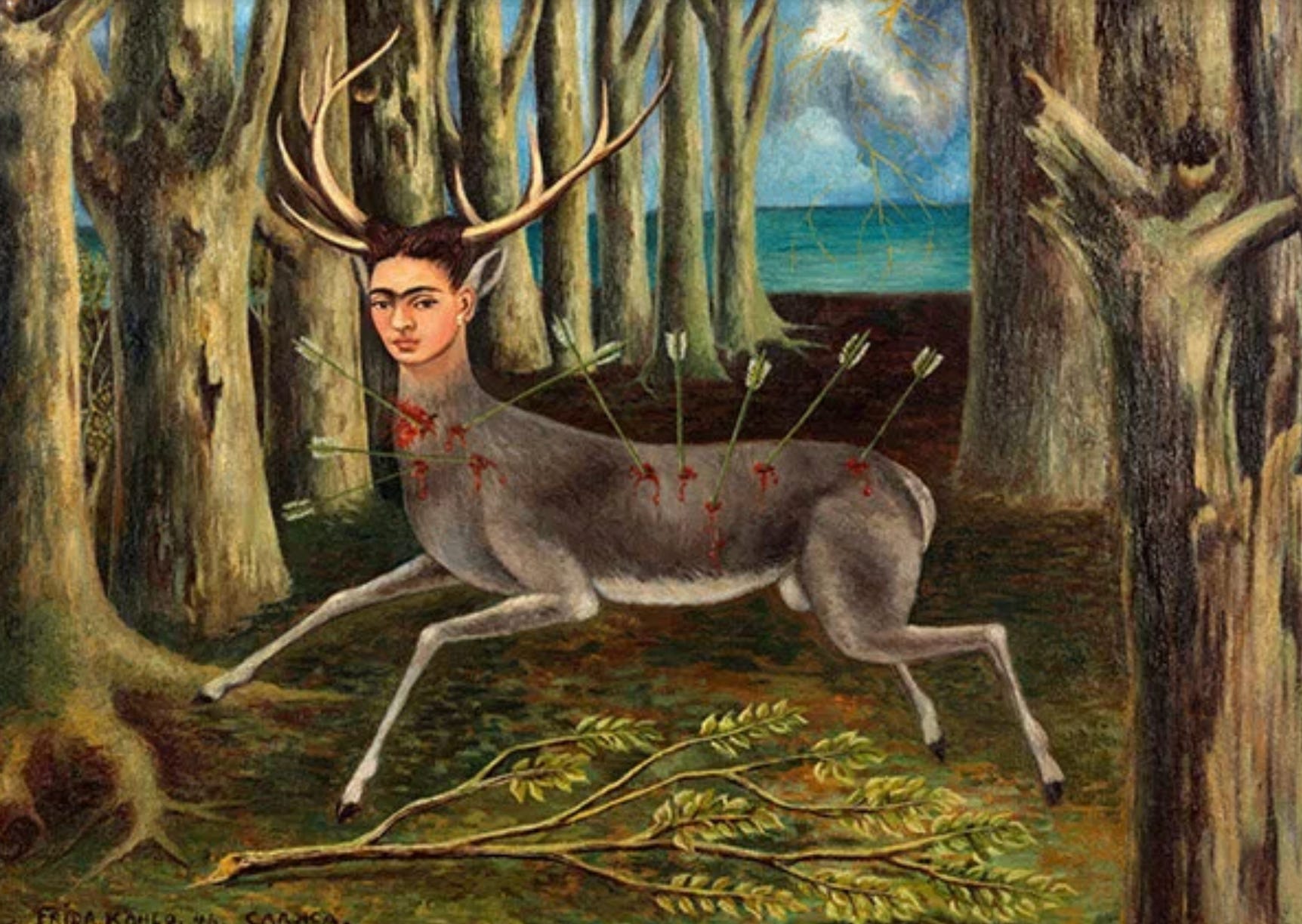
Frida Kahlo, The Wounded Deer (1946)
The Tortured Genius Myth: Art as Psychological Sublimation
But pain by itself creates nothing - it can just as easily destroy a life as inspire one. What fascinates us is not suffering itself, but transformation. In psychoanalytic theory, this process is known as sublimation — the ability to redirect overwhelming emotional energy into creative expression. The artist performs something remarkably close to alchemy. Fear becomes color. Grief becomes composition. Chaos becomes rhythm. Something deeply private is transformed into something another person, decades or even centuries later, can experience.
Friedrich Nietzsche famously wrote: “We have art in order not to die of the truth.”
For the artist, creativity is often less an act of self-expression than an act of survival. By placing unbearable emotions onto canvas, they create distance from them. What was once overwhelming becomes observable. Pain ceases to be only an experience and becomes an object that can be shaped, examined, and perhaps even understood. And this transformation — not suffering itself — is the true miracle.
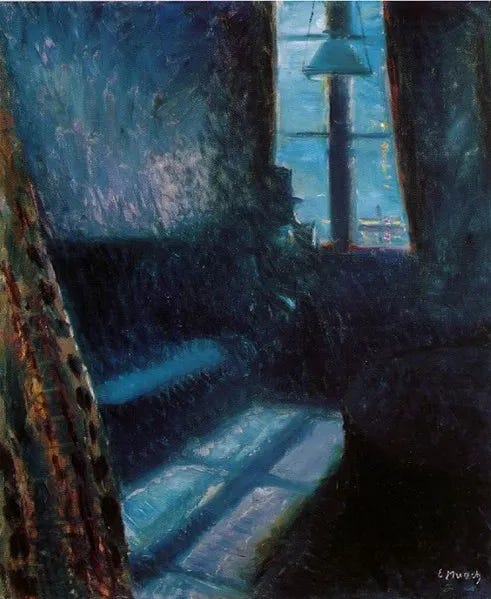
Edvard Munch, Night in Saint-Cloud, (1890)
The Tragedy Paradox: Why Looking at “Sad” Paintings Feels Comforting
If painful art reflects suffering, why do we actively seek it out? The answer lies in one of psychology’s most intriguing puzzles: the Tragedy Paradox - the mechanism of contemplating suffering in art, which is similar to the processes that occur within us when we voluntarily expose ourselves to stories, music, films, and paintings that evoke pain. Recent research in psychology and neuroaesthetics shows that such experience allows us to engage with sometimes unbearable emotions of our daily lives under conditions of complete safety. Unlike real grief, art cannot actually harm us. The painting creates emotional distance. We see our psychological struggles while simultaneously knowing we are safe.
Some researchers even suggest that viewing aesthetic representations of sadness may trigger physiological responses associated with comfort, empathy, and emotional regulation. And instead of leaving us emotionally depleted, tragic art often helps us process feelings that remain unresolved in our own lives. We are not simply witnessing someone else’s suffering. We are living out our own, in order to lessen the pain within. This may explain why certain paintings feel therapeutic - art becomes a psychological laboratory where fear, loneliness, loss, and mortality can be explored without their real-world consequences.
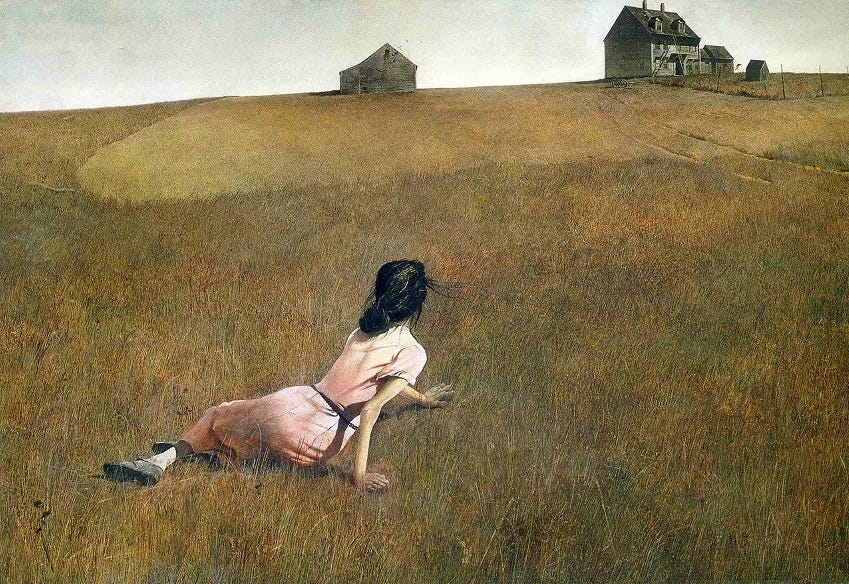
Andrew Wyeth, Christina's World, (1948)
The Dark Side of Romanticizing Mental Illness in Art
Yet our fascination with a “tragic art” has a dark side.
Western culture has romanticized the connection between creativity and mental illness for centuries. We learned to believe that depression produces masterpieces, trauma creates genius, and happiness somehow weakens artistic vision. But modern psychology paints a much more complicated picture. While adversity may provide powerful material, severe psychological distress often disrupts cognitive abilities that creativity depends upon — attention, memory, motivation, and sustained work.
Confusing the two risks glorifying illnesses that have destroyed countless lives while overlooking the immense discipline, resilience, and craftsmanship required to produce great art. Pain may provide the raw material, but it never guarantees the masterpiece. Many extraordinary artists created despite their suffering, not because of it. The real achievement was never the pain. It was the ability to transform pain into meaning.
And their example gives us great hope that, despite pain — or together with it— we are still capable of creating something beautiful. That our pain is not in vain. That our deepest wounds do not have to pause our life stories but can instead be transformed into a remedy for us and, perhaps, others.
So, next time you stand before Van Gogh’s The Starry Night — painted from memory inside an asylum, during one of the darkest periods of his life — look past the swirling sky and the myth. What you are looking at is not proof that suffering produces genius. It is evidence of a mind reaching for order, for beauty, for meaning, even as everything around it was breaking apart. His genius was never the pain itself. It was his refusal to let the pain have the final word.
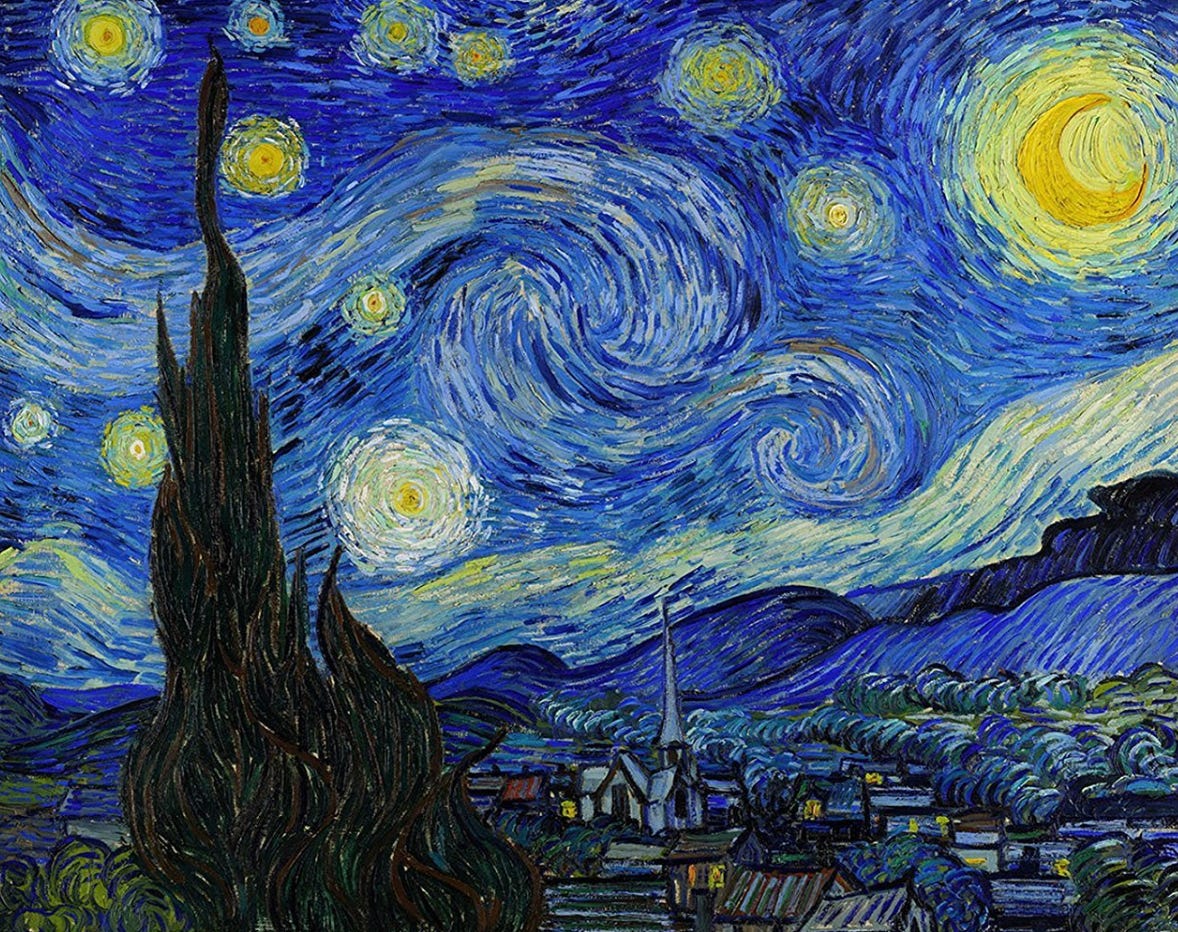
Vincent van Gogh, The Starry Night (1889)
Further Reflections from Our Archive:
How Does Having an Original Painting at Home Help to Decrease Cognitive Exhaustion?