
The Wind of Hope
Thank you, Andrew Wyeth

I was never supposed to like American painter Andrew Wyeth.
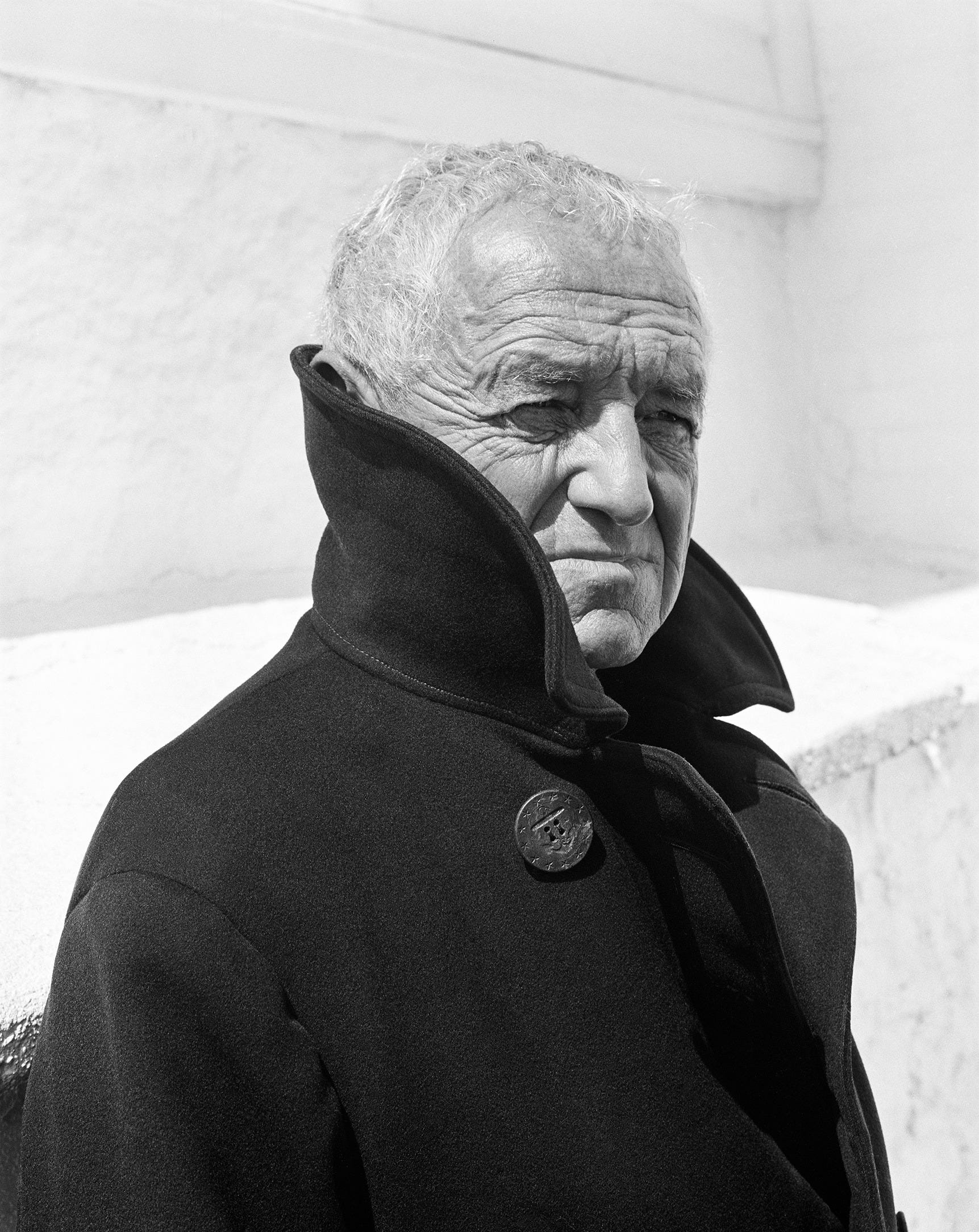
Andrew Wyeth, Maine, 1983. Photo by Bruce Weber.
For me, as a lover of stark contrasts, vibrant color blocks, and broad, sweeping brushstrokes, his paintings should have felt dull and monochromatic. My breath, perpetually caught in the frantic pace of modern life, should not have slowed down to contemplate the quiet rhythm of his rural subjects, where nothing ever seems to happen. And my eyes, oversaturated by journeys to the world’s most vivid places, should not have filled with tears at the sight of landscapes the color of parched straw.
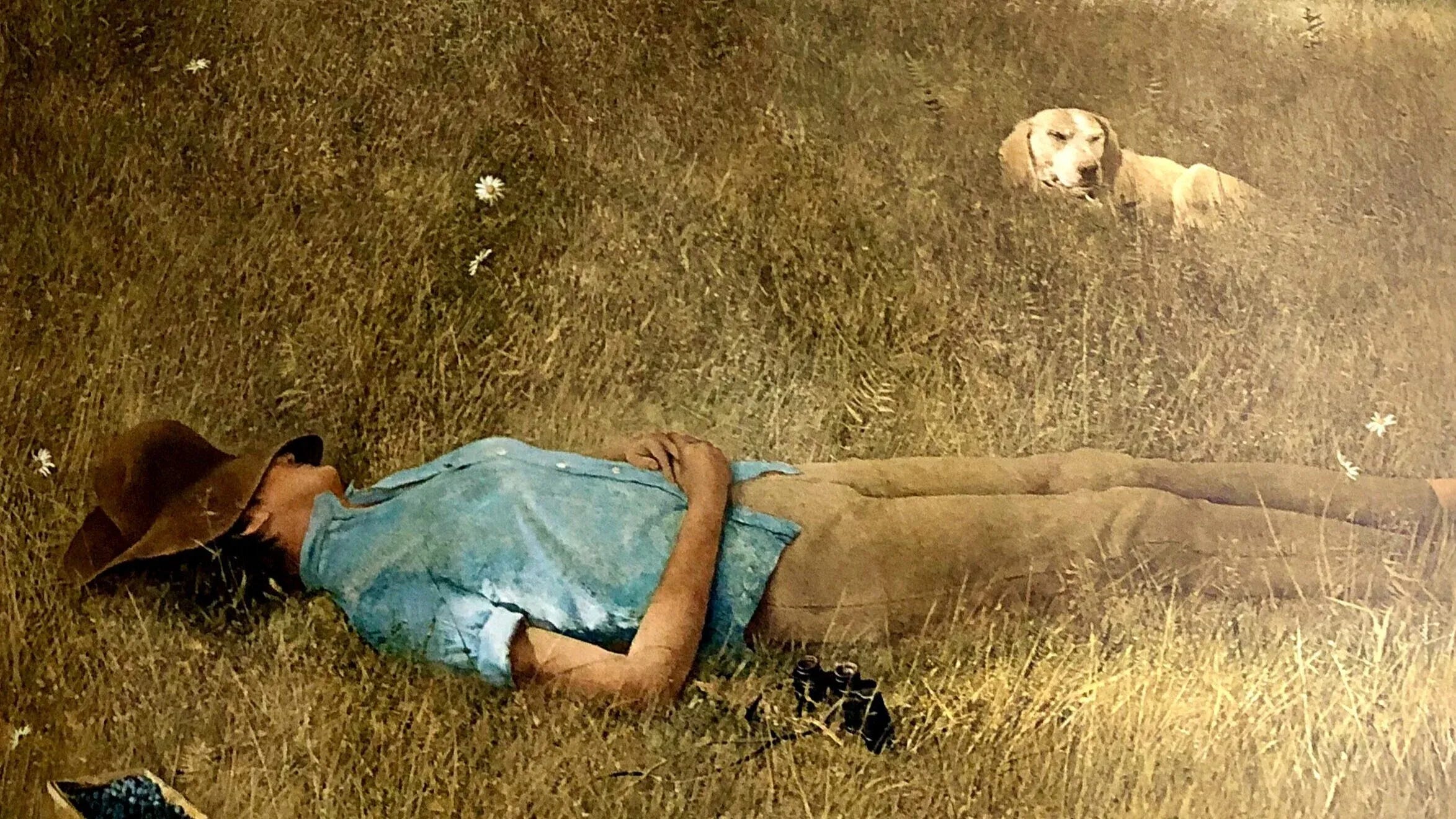
Andrew Wyeth, Distant Thunder, 1961. Tempera on panel.
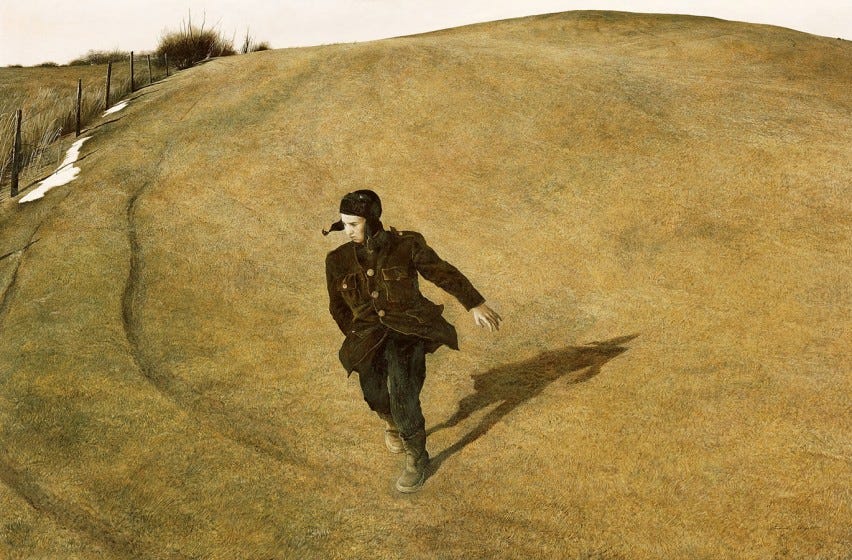
Andrew Wyeth, Winter 1946, 1946. Tempera on panel.
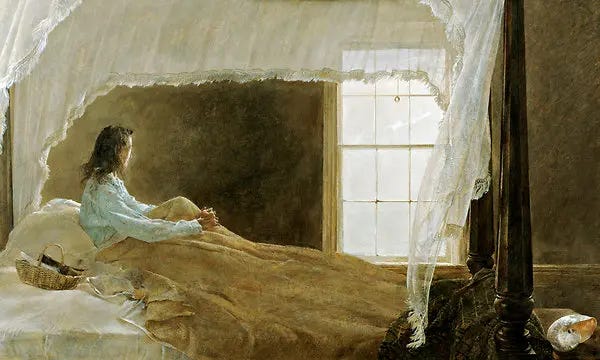
Andrew Wyeth, Chambered Nautilus, 1956. Tempera and watercolor on dry brush.
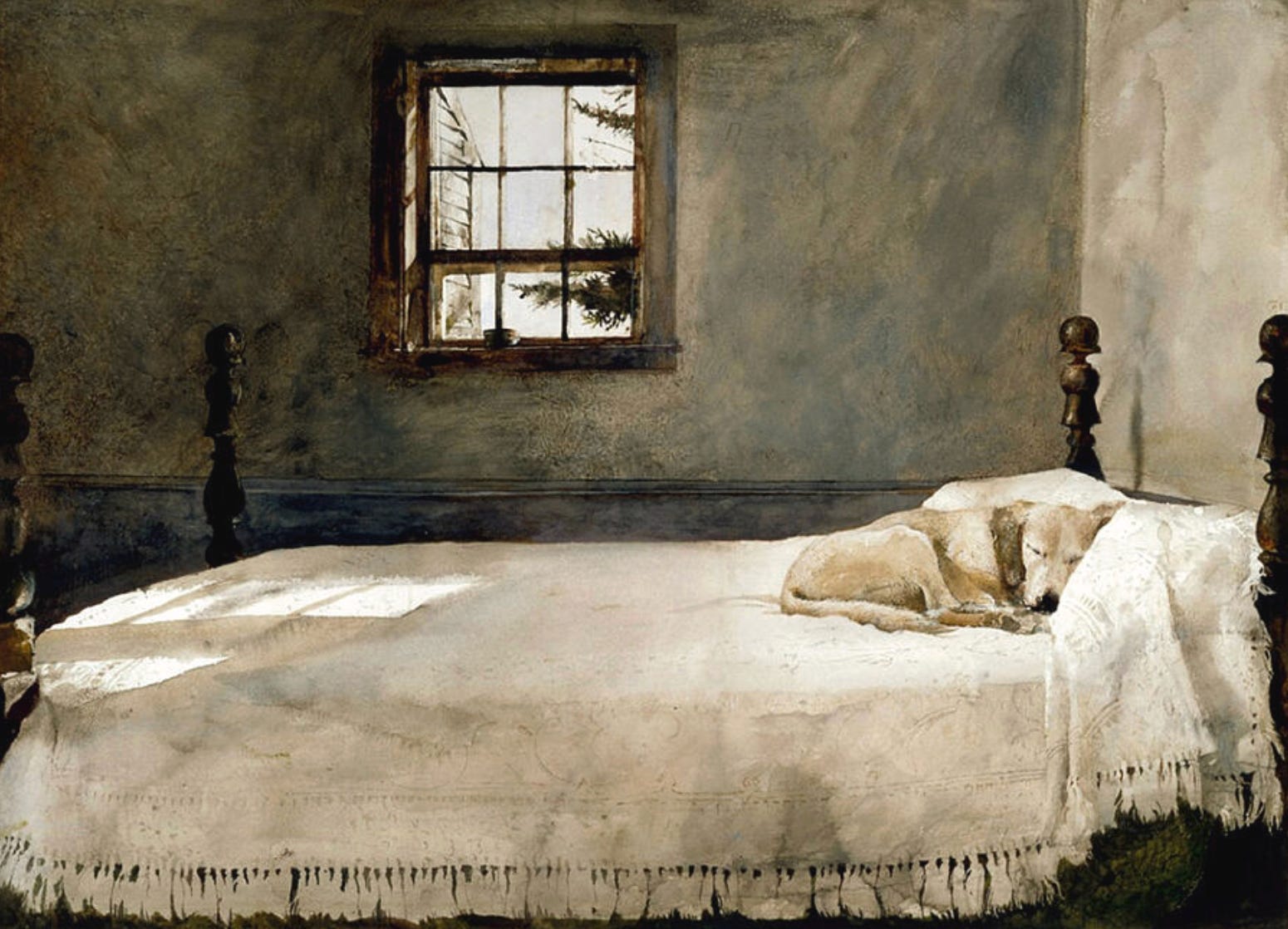
Andrew Wyeth, Master Bedroom, 1985. Watercolor on paper.
Yet, that is exactly what happened - out of all the masterpieces in art history, almost all his paintings and, in particular, “Wind from the Sea” have become one of the most poignant ones.
Almost instantly, I recognized something deeply familiar in the dry grass of Pennsylvania, the rugged landscapes, and the quiet lives of Maine—places Wyeth hardly ever left throughout his life. It felt as though I had stumbled upon a map of my own terra incognita—a barren, inner territory I had always been too afraid to visit. To protect myself from further pain, it had always felt safer to forget that this land existed, and never return.
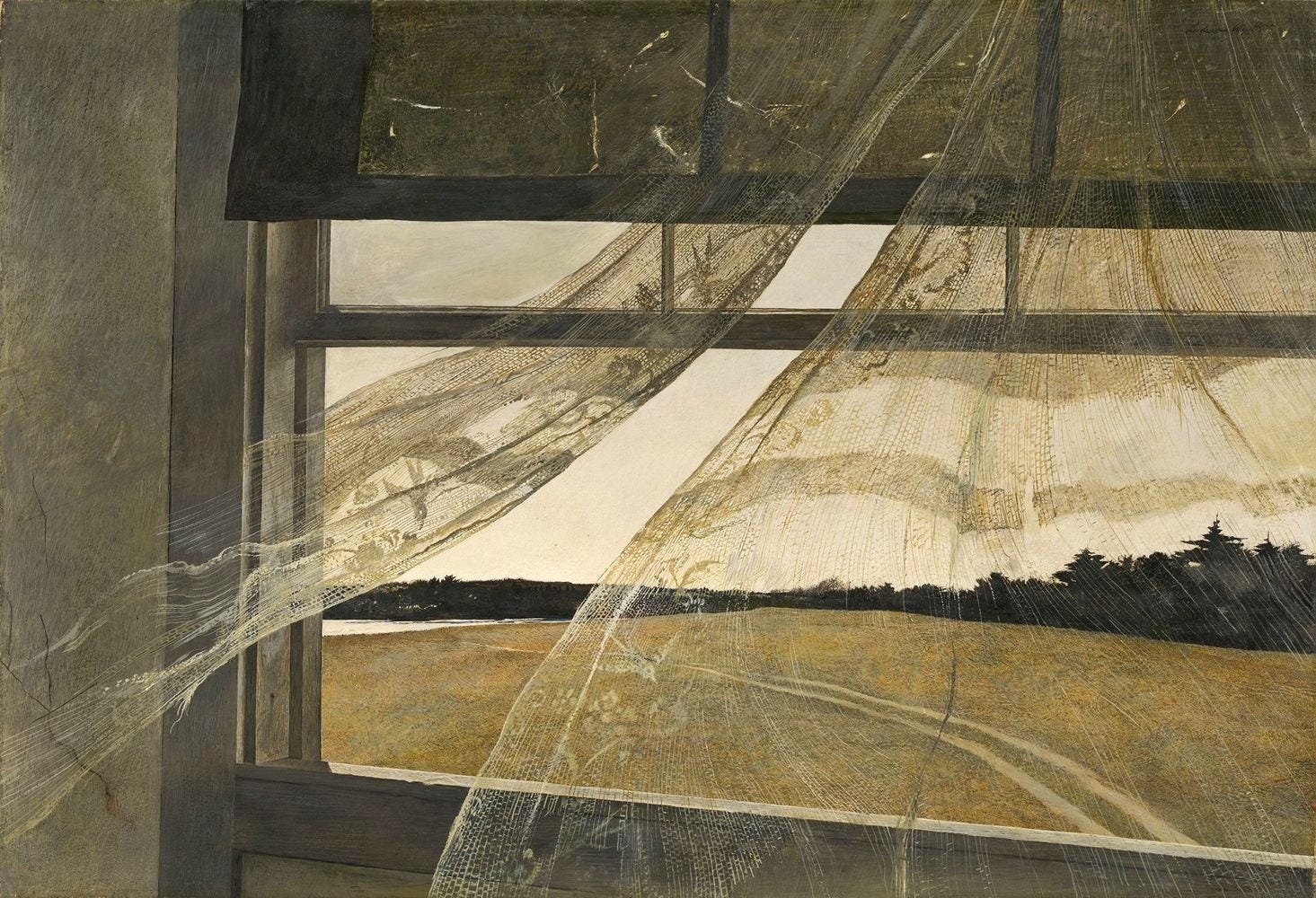
Andrew Wyeth, Wind from the Sea, 1947. Tempera on panel.
In the summer of 1947, Wyeth climbed into a long-abandoned room on the third floor of the Olson House in Cushing, Maine—a room where objects lay buried beneath decades of undisturbed dust. Its owner, Christina Olson, one of his most frequent models, lived with a degenerative muscular disorder that had taken away her ability to walk. A year later, she would become the subject of his most famous painting, Christina’s World.
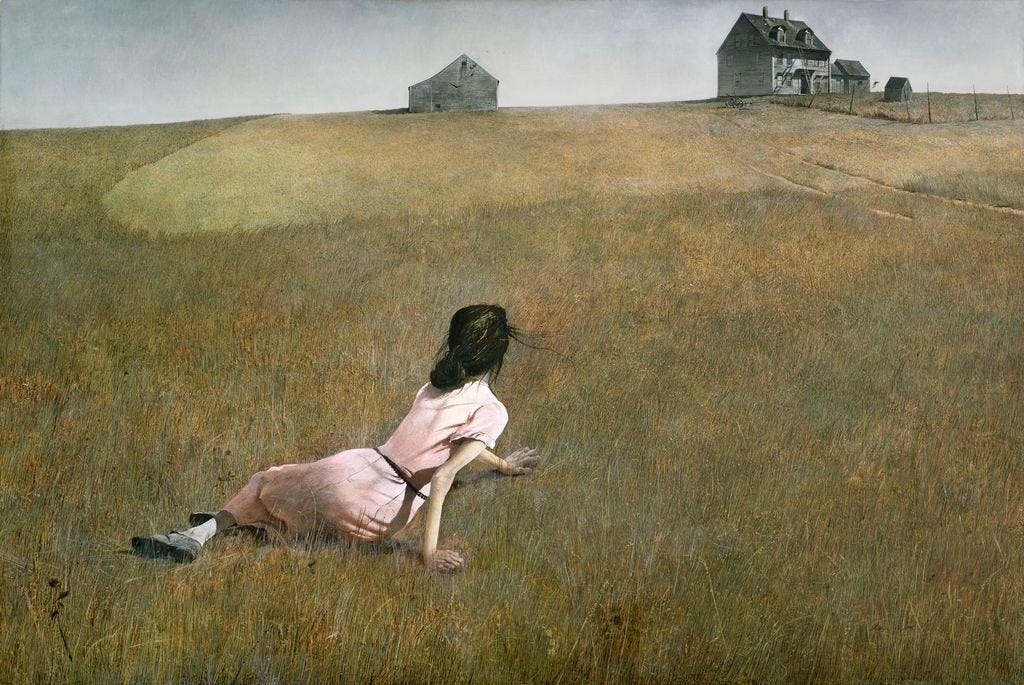
Andrew Wyeth, Christina's World, 1948. Tempera on gessoed panel.
Wyeth forced open the wooden window. Resistant at first, as though asleep for decades, it finally yielded, and a sharp, crisp wind from the Atlantic pierced the room’s suffocating stillness.
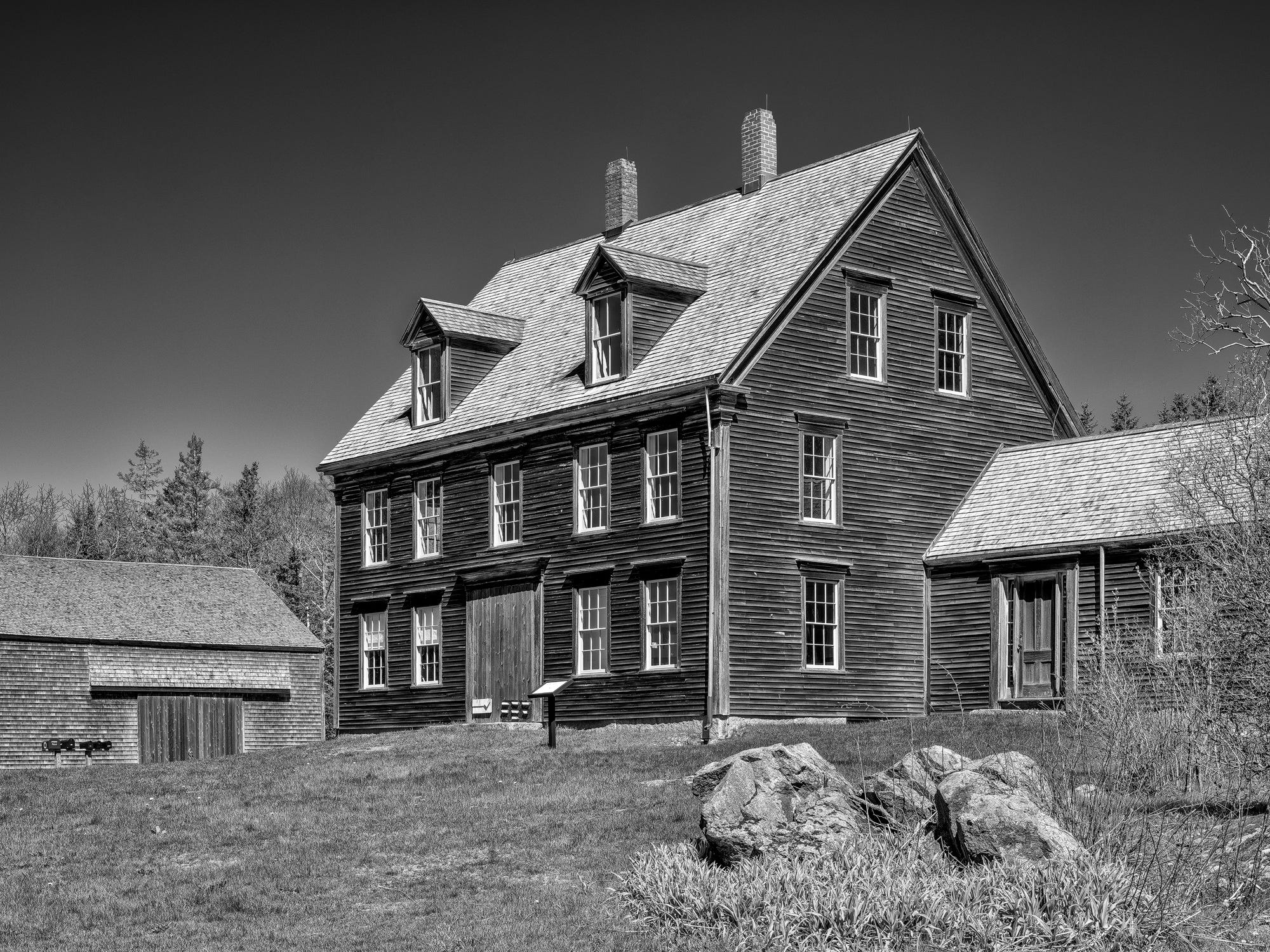
The Olson House, Maine. Photo by Keith Dotson.
“It was hot in there, and I opened the window, and all of a sudden this wind blew the curtain, which hadn’t been moved for about thirty years. Gosh, it was fantastic! That thin crocheted net rose from the dusty floor so fast, it wasn’t like a wind, it was like a ghost, a spirit given an exit...”, - Wyeth later recalled.
In his notes, he reflected that the sturdy window frame symbolized Christina’s inner steel—her willpower, the stubbornness that held her life together despite her failing body. The lace—torn, stained, and worn down to little more than cheesecloth—became a metaphor for her physical decay, for the fragility of the human body itself. The birds, frozen in the pattern of the cheap fabric, represented her youth and a spirit trapped, yet desperate to break free.
The birds...
It is with them that my own reading of Wyeth’s symbolism begins to diverge. They are not frozen to me. As the lace surges in the sudden gust of ocean air, these embroidered birds, caught by the wind, seem to take flight—coming alive and reclaiming their long-awaited freedom.
The gust of wind wasn’t just a fleeting breeze breaking thirty years of stillness, nor merely a metaphor for death—it was the first sign of life returning.
The birds take over.
My eyes catch on their embroidered wings, and I follow them—out through the window, beyond the frame, down the dirt road. As I walk across this dry grass and sun-scorched earth in my mind, I begin to feel the life beneath my feet. I remember what life feels like. Life. It has never vanished. I see the Ocean.
To heal, I only needed to step into my most abandoned, terrifying inner room, stand still by the window, and find the courage to turn the handle. I needed to let that fresh gust of wind brush against my skin, allowing long-dormant birds to finally take flight.
And I can feel those birds, even now, beating their wings against my ribcage.
The painting’s deeply muted, earthy palette tells me that hope does not always arrive as a raging fire. Sometimes it reveals itself in the ordinary, in the familiar. Healing does not have to begin with a heroic act; it can start with something as quiet as a faint, unfamiliar coolness against the skin, or a subtle shift in the air.
Perhaps that quiet shift was enough.
Christina Olson, despite the brutal progression of her paralysis and medicine’s grim predictions, went on to defy her diagnosis, living a long, stubborn life into her late seventies. Wyeth painted a tragedy of confinement, but I think his hands, perhaps unconsciously, also captured the moment survival begins to take over.
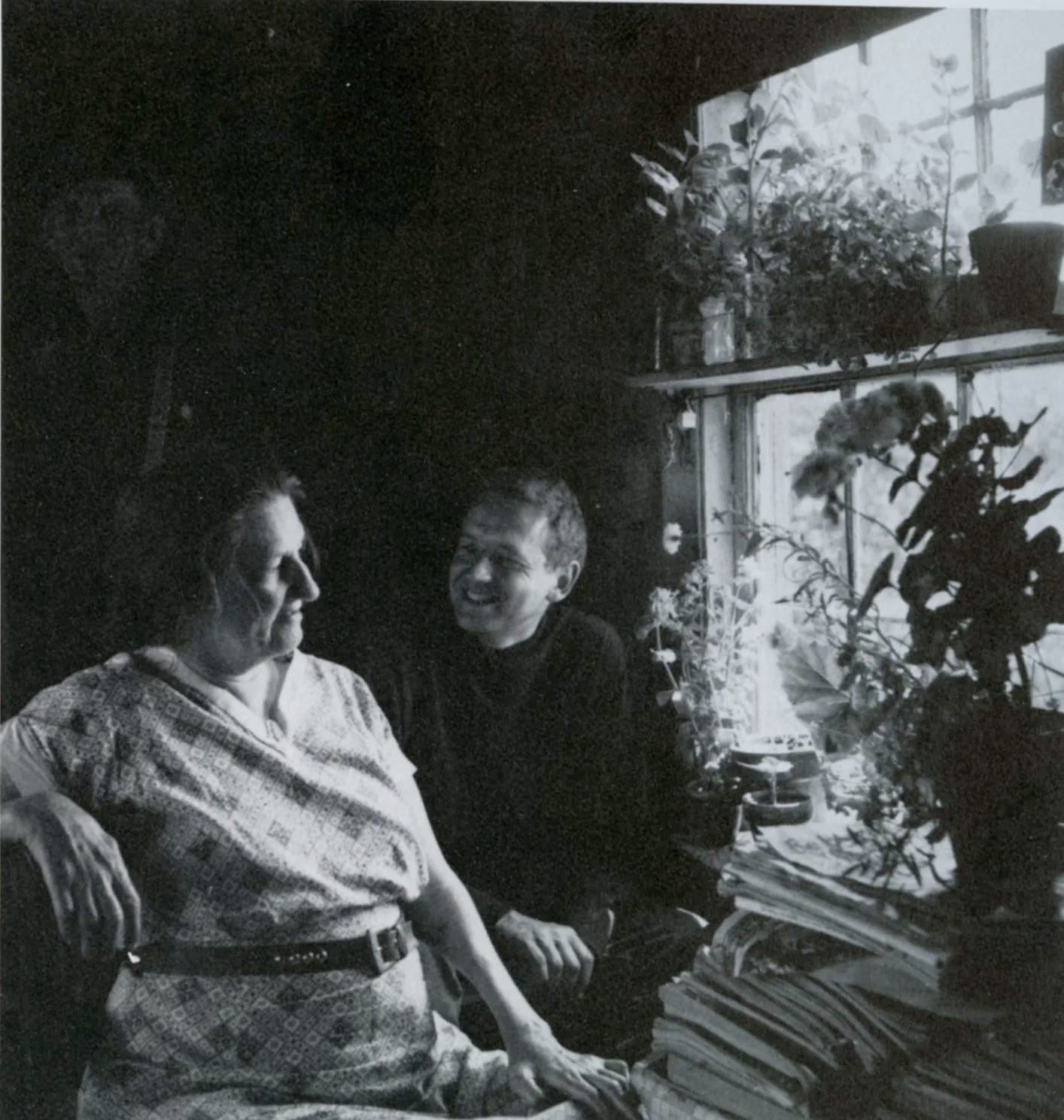
Christina Olson and Andrew Wyeth at the Olson House, Maine, 1951. Photo by Kosti Ruohomaa.
I feel the birds. I hear the Ocean…
P.S. Andrew Wyeth’s 'Wind from the Sea' (1947) is a tempera on hardboard masterpiece measuring 18 1/2 x 27 9/16 inches. The painting is currently preserved and on display in the permanent collection of the National Gallery of Art in Washington, D.C.
P.P.S. This is how that window and that room look now. Breathtaking, isn't it?
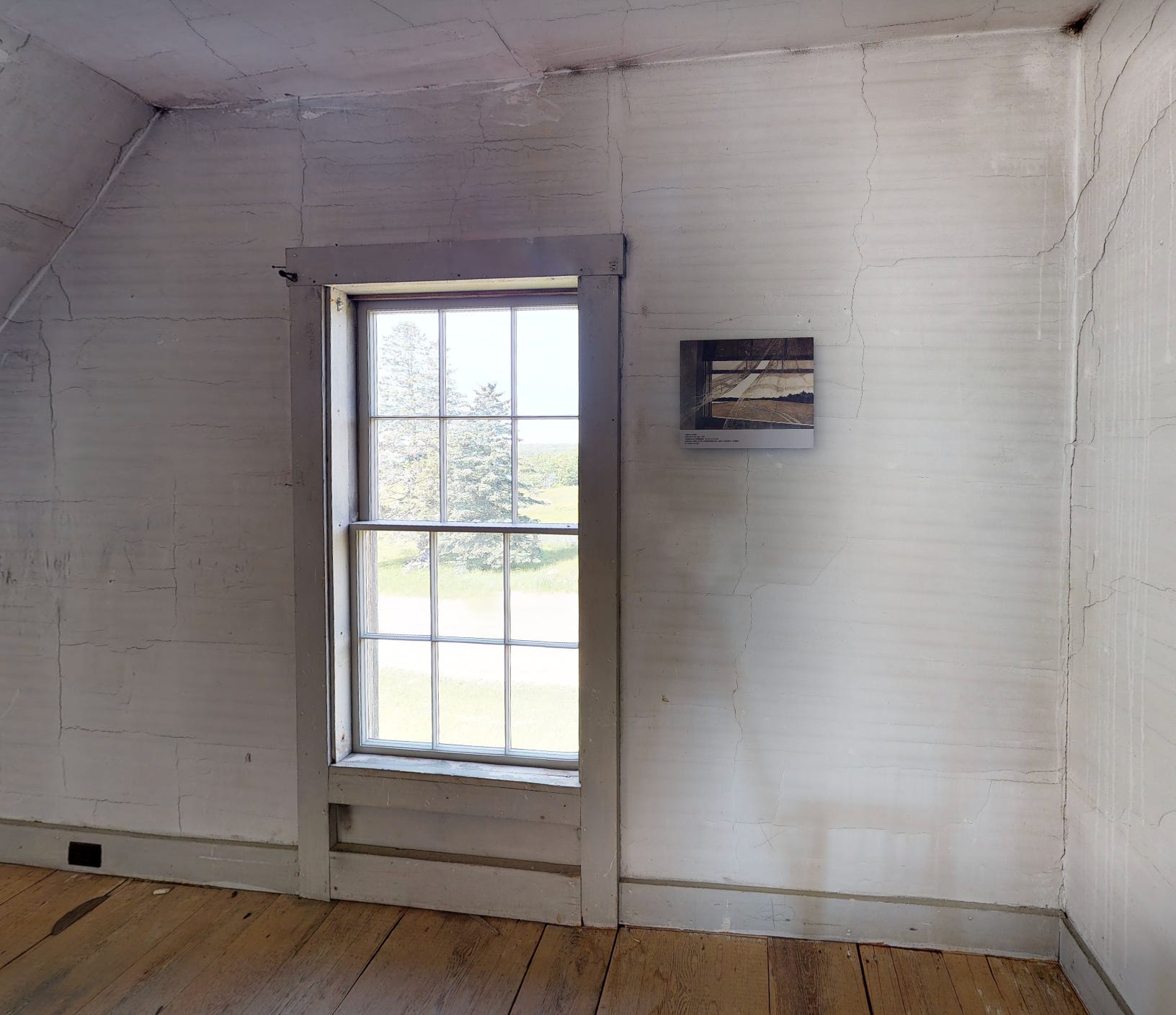
More for curious minds:
The Paragone is ad-free, AI-free, and written entirely by one loving, passionate human—me. If my work touches your heart, please consider supporting it with a donation to help keep it alive and thriving. If you already do, I am deeply grateful.
 | A guest post by
|